In the theater of the Cold War, astronauts lost in the Darién Gap found themselves besieged by their deepest fears when confronted by an Indigenous person. Did they imagine they would be beheaded or devoured by a “savage cannibal”? The deconstruction of film and propaganda archives on tropical survival training challenges colonial narratives embedded in the conquest of space.
Bienvenidos conquistadores interplanetarios y del espacio sideral is a documentary by La Vulcanizadora that interweaves footage from the US space program with episodes from Colombian history. The film articulates two dimensions: on one side, the visit of the Apollo 11 astronauts to Bogotá and the testimonies from a press conference where they were asked whether the Moon’s material resources should be shared with all humankind, and whether the program’s cost was justifiable given the economic conditions of the so-called Third World. On the other side, it presents NASA images of that same crew’s training mission at the US Air Force’s Tropical Survival School (TSS) in the former Canal Zone. The TSS offered formal courses in basic tropical survival for air commandos and army special forces — including astronauts John Glenn and Neil Armstrong — and put its students through real-world survival experiences.
At Beta–Local, nine stills from the film are presented. They question the role of cinema in producing official truths, while opening the possibility of futures that move beyond narratives of conquest and colonization in the Americas and in space, bringing Indigenous ancestral knowledge into conversation with modernity.
Credits
Bienvenidos conquistadores interplanetarios y del espacio sideral (2024) [Welcome Interplanetary and Outer Space Conquerors]
Film, 95 min. Premiere in Puerto Rico. In the gallery: film stills, photographic print.
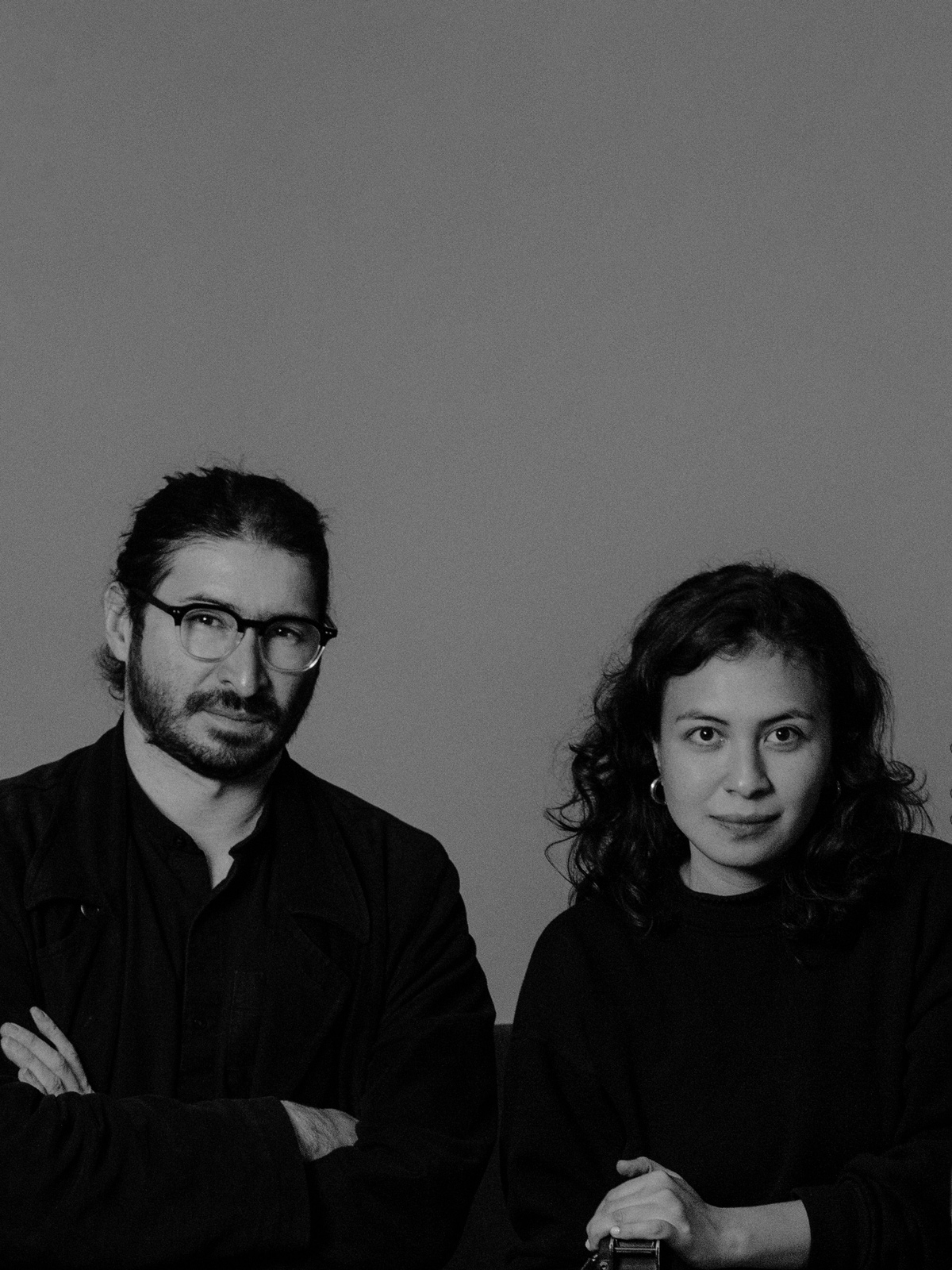
La Vulcanizadora (María Rojas Arias and Andrés Jurado)
Artists / Filmmakers Based in Bogotá, Colombia
La Vulcanizadora is the studio of artists and filmmakers María Rojas Arias and Andrés Jurado, where cinema, visual art, and theater converge. Their work is defined by an intense engagement with archives and counter-archives, intertwined with processes of historical memory, revolution, resistance, science fiction, colonialism and anti-colonialism, class struggle, and political crossroads.
Rooted in present-day Colombia, La Vulcanizadora acknowledges the cultural legacies of Africa, Asia, and other regions, tracing connections that extend across the Caribbean, the Amazon, and the Orinoquía. The studio collaborates with a diverse community of contributors — living and dead, visible and invisible — who bring knowledge from science, biology, philosophy, education, ethology, anthropology, history, music, literature, and translation, as well as from multiple forms of embodied and situated knowledge. Their practice critically and provocatively engages questions of production and institutional structures.